PRESS POWER TO BEGIN
EST. 1897 · BROADCASTING IN GLORIOUS 480i

THE CATHODE MUSEUM

For over a century, a single invention painted every picture the world watched — one glowing line at a time. Step inside the tube.

CATHODE·MATIC 2000
CH 02 · A CENTURY IN GLASS

THE STORY OF
THE TUBE

From a physicist's glowing glass experiment to the screen in every living room on Earth — and the dramatic fall that followed.

1897
KATHODENSTRAHLRÖHRE
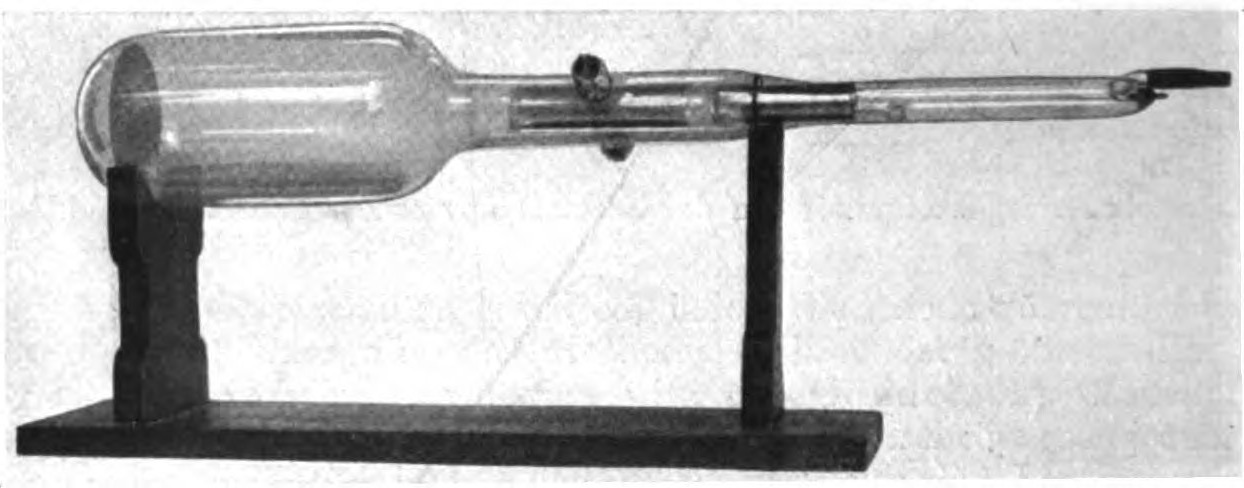
Braun's original cathode-ray tube mounted on a wooden lab stand
Karl Ferdinand Braun's cathode-ray tube on its wooden lab stand — the glass bottle every TV screen descends from. Eugen Nesper / Wikimedia Commons, public domain

The Braun Tube

German physicist Karl Ferdinand Braun builds the first cathode-ray tube: a glass bottle with the air pumped out, firing invisible electrons at a glowing chemical screen. He used it as a lab instrument — he had no idea it would become television. The name never left: in German and Japanese, a picture tube is still called a "Braun tube" today.

FUN FACT: "CATHODE RAYS" WERE NAMED BEFORE ANYONE KNEW ELECTRONS EXISTED
1911
THE "ELECTRIC TELESCOPE" · ST. PETERSBURG

Distant Electric Vision

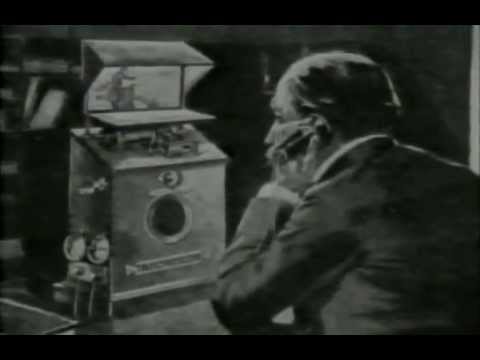
In St. Petersburg, physicist Boris Rosing wires a spinning-mirror camera to a Braun tube and coaxes four blurry bands of light onto its tiny screen — the first television picture ever received on a CRT. Helping in the lab: a student named Vladimir Zworykin, who will carry the dream to America and build the tubes that make TV real. That same year in London, engineer A. A. Campbell-Swinton lays out the complete recipe for all-electronic television — electron beams at both ends, camera and screen — a blueprint nobody on Earth can build yet.

CAMPBELL-SWINTON CALLED IT "DISTANT ELECTRIC VISION" — TELEVISION, DESCRIBED BEFORE IT COULD EXIST
1927
"THERE YOU ARE — ELECTRONIC TELEVISION"
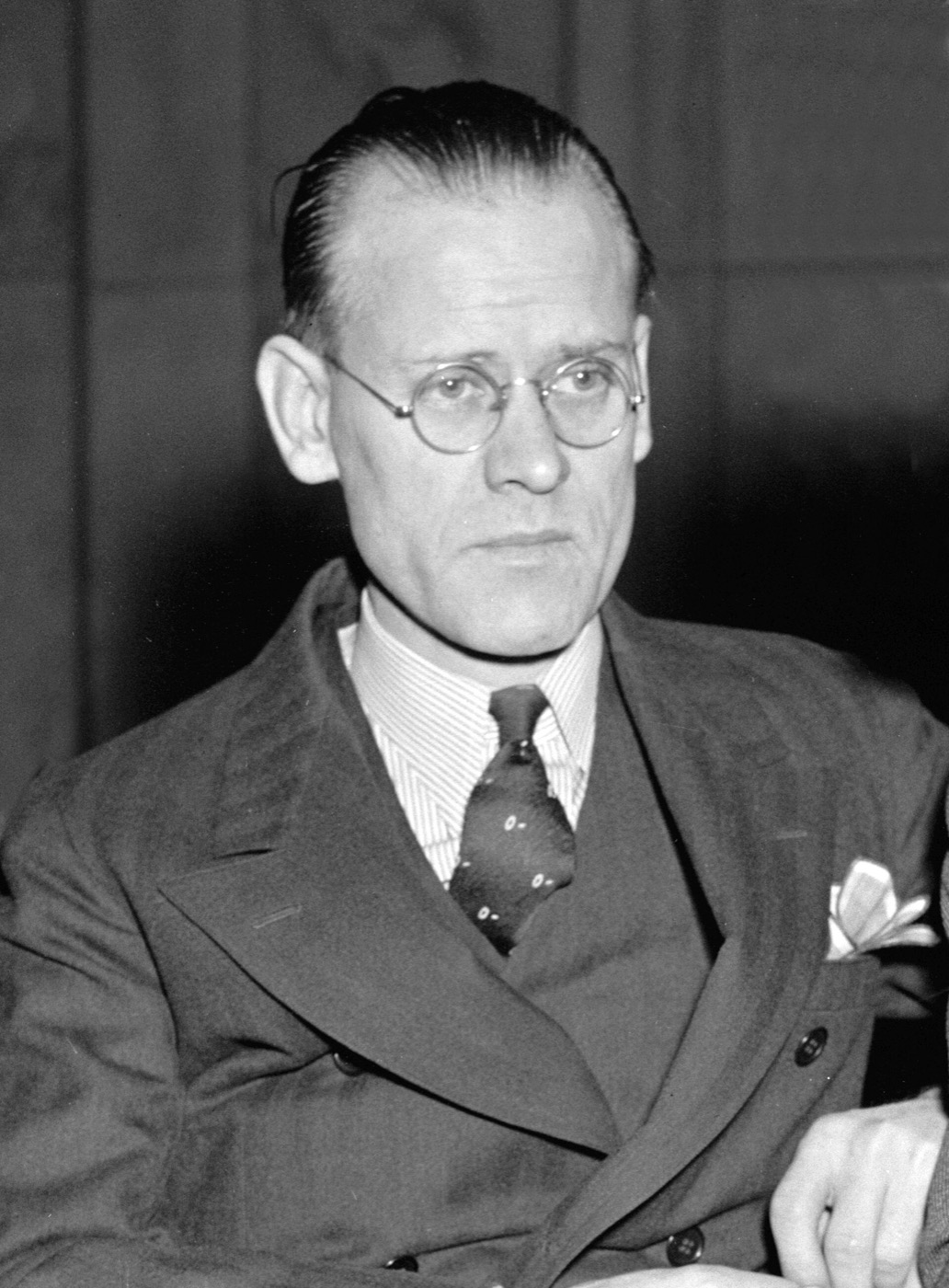
Portrait of inventor Philo T. Farnsworth
Philo T. Farnsworth, the farm kid who beamed the world's first all-electronic television picture at age 21. Harris & Ewing / Wikimedia Commons, public domain

The Farm Boy's Idea

Philo T. Farnsworth dreamed up electronic TV at age 14, while plowing a potato field — the neat back-and-forth rows made him imagine painting a picture with an electron beam, line by line. At 21 he transmitted the first all-electronic image: a single straight line.

WHEN INVESTORS ASKED TO SEE MONEY FROM THE INVENTION, HE BROADCAST A DOLLAR SIGN
HIS ONLY TV APPEARANCE: MYSTERY GUEST "DR. X" (1957) — PRIZE FOR INVENTING TV: $80 AND A CARTON OF CIGARETTES
1939
NEW YORK WORLD'S FAIR
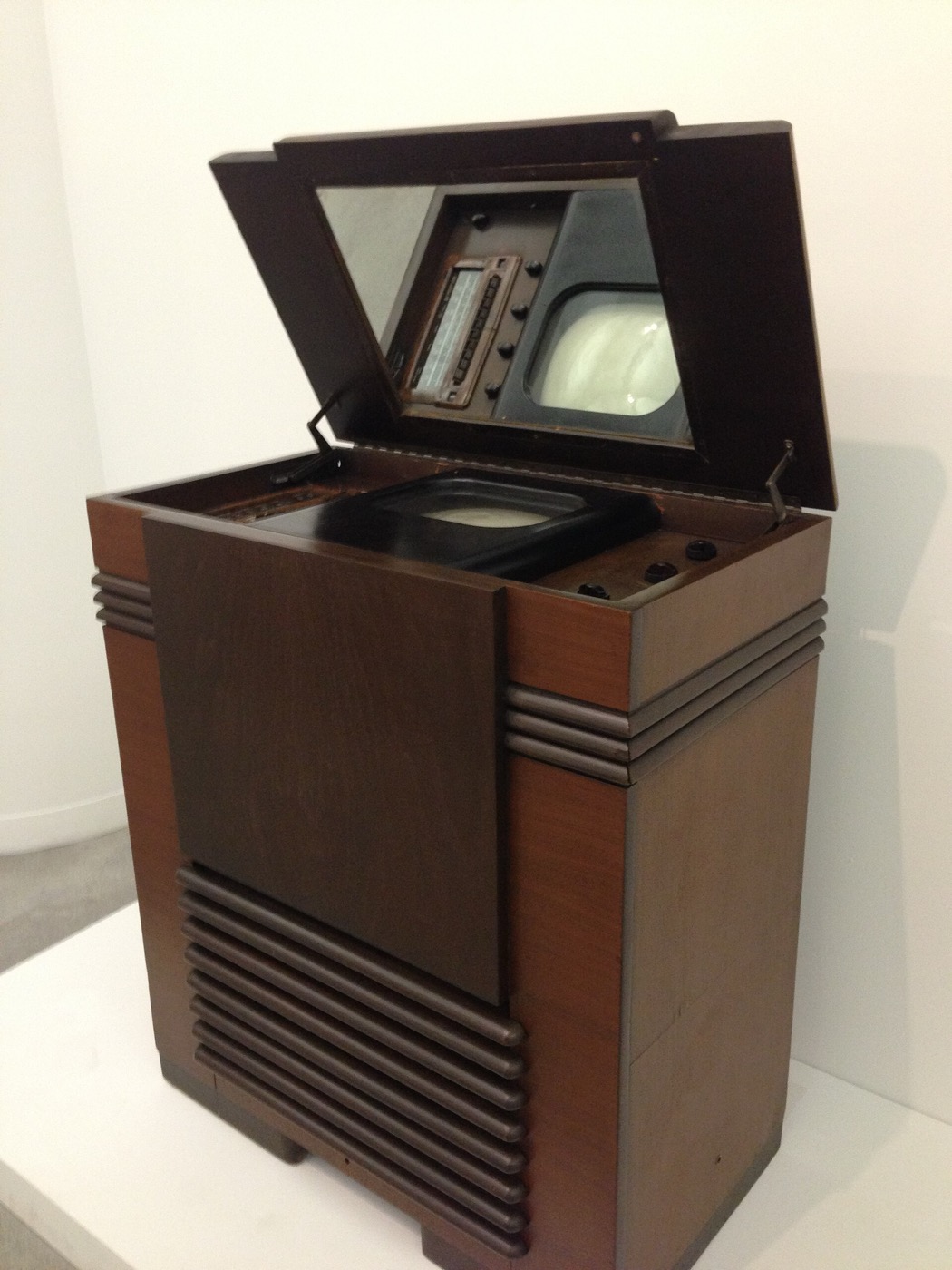
RCA TRK-12 console television with its mirror lid open
An RCA TRK-12 like the ones at the 1939 World's Fair — you watched its picture in a mirror folded out of the lid. Jacklee / Wikimedia Commons, CC BY-SA 4.0

Television Meets the World

RCA unveils the TRK-12 at the New York World's Fair. Its picture tube was so long it pointed at the ceiling — you watched the reflection in a mirror inside the lid. President Roosevelt becomes the first president ever on TV. Fairgoers suspected a hidden film projector, so RCA also showed a "Phantom Teleceiver" in a see-through Lucite cabinet — nothing inside but glowing glass. Cost: $600. A new car was $700.

SCREEN SIZE: 12 INCHES · CABINET SIZE: SMALL REFRIGERATOR
1948
8:00 PM TUESDAY — EVERYONE'S WATCHING UNCLE MILTIE
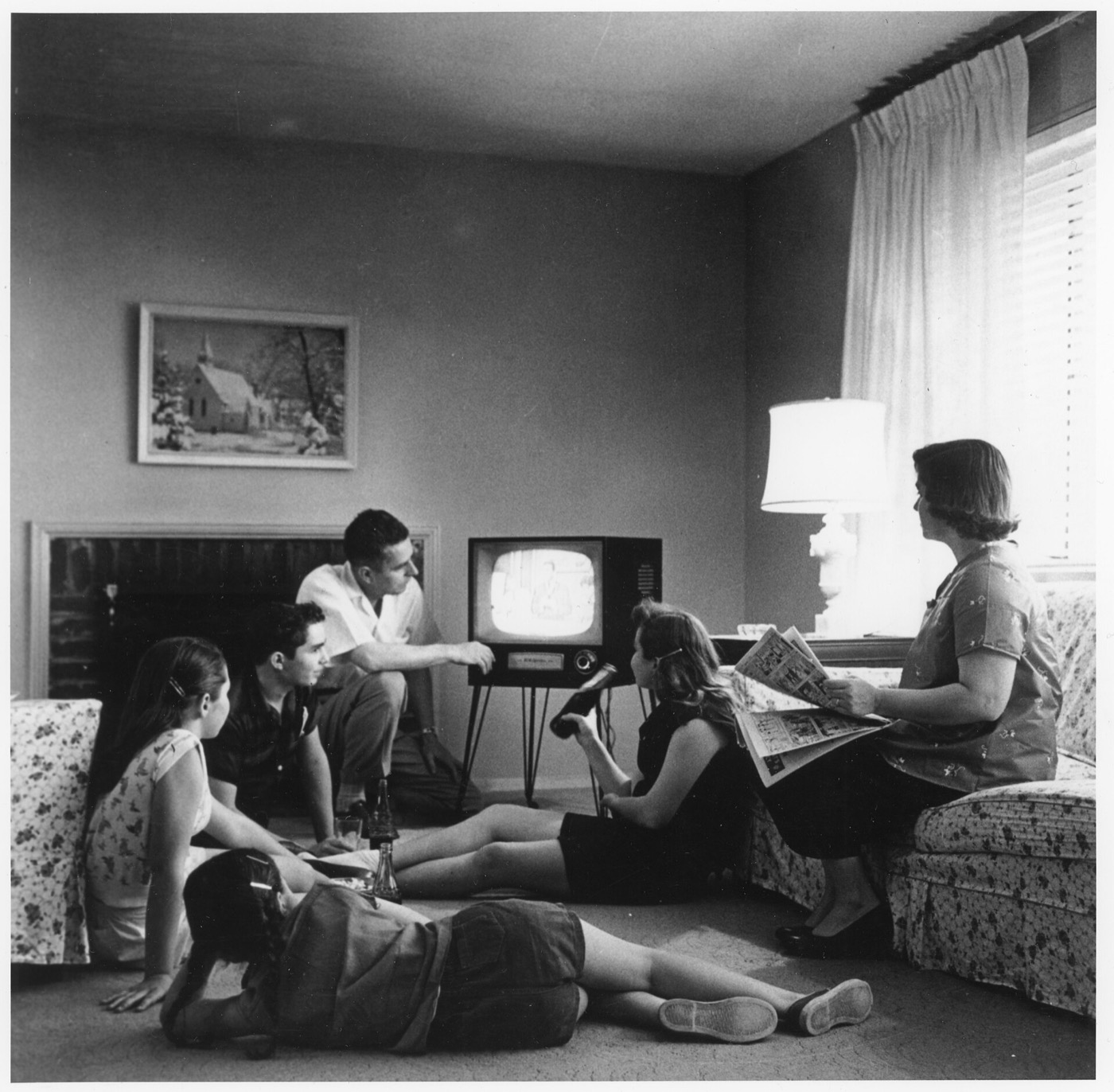
A 1950s family gathered on the floor watching television
Evenings, rearranged: the whole family pulls up a patch of carpet around the new set. Evert F. Baumgardner / U.S. National Archives via Wikimedia Commons, public domain
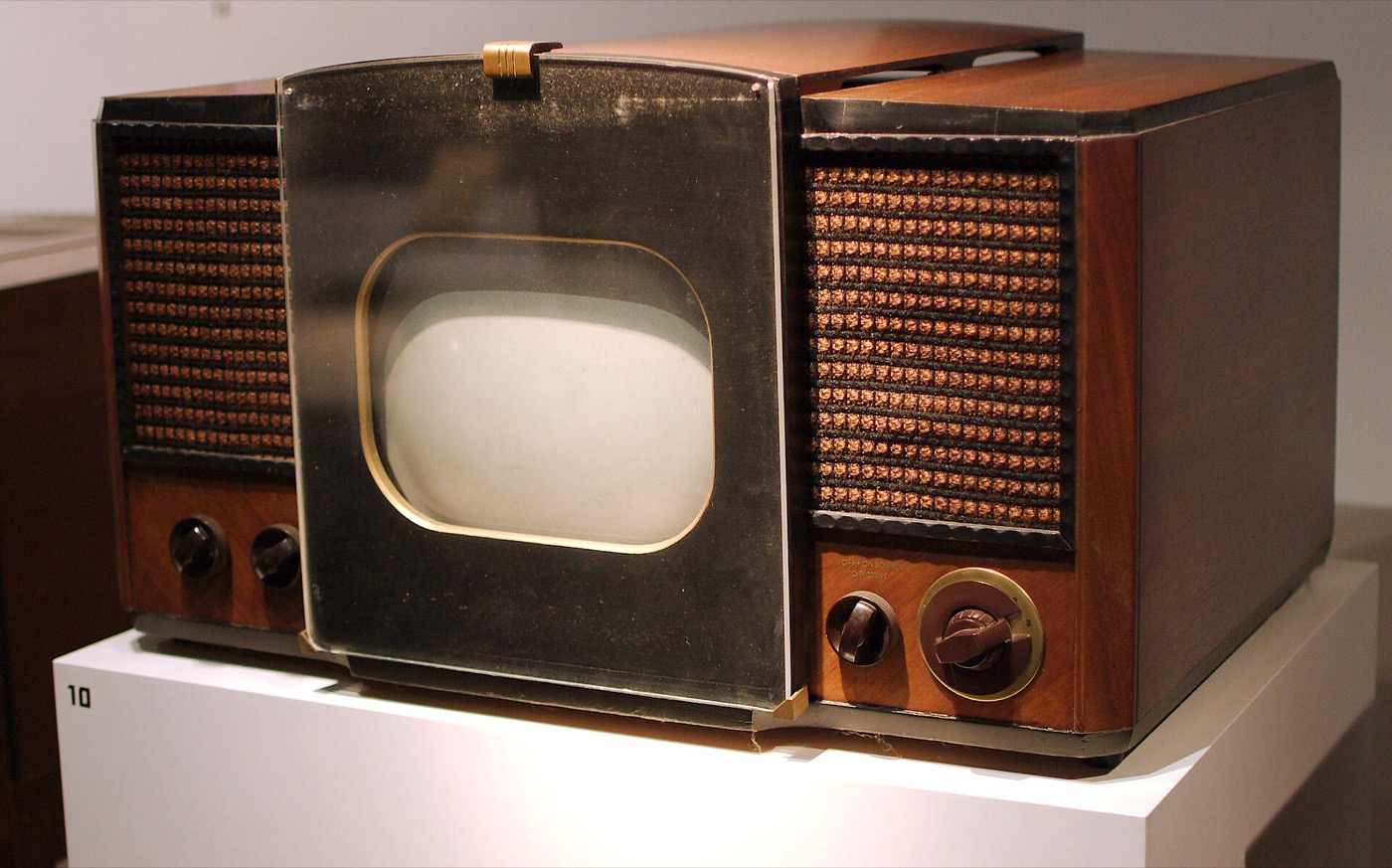
RCA 630-TS tabletop television in a wooden cabinet
RCA's 630-TS, the first mass-produced television — ten glowing inches that kicked off the boom. Fletcher6 / Wikimedia Commons, CC BY-SA 3.0

The Living-Room Revolution

After World War II, TV explodes. In 1946 America had ~6,000 sets; by 1951, 12 million. Families crowd around tiny round screens in giant wooden boxes. Restaurants empty out on Tuesday nights when Milton Berle is on — theaters called it "the Berle effect."

NEIGHBORS WITHOUT A TV SUDDENLY BECAME VERY FRIENDLY
WHY DO DIALS START AT 2? THE FCC DELETED CHANNEL 1 IN 1948 — AND NEVER RENUMBERED THE REST
1954
$1,000 IN 1954 ≈ $11,000 TODAY
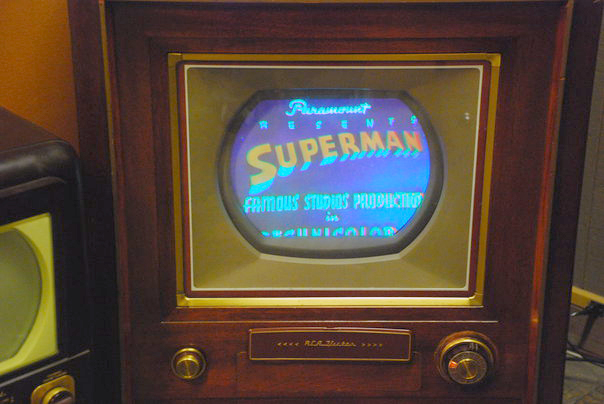
RCA CT-100 color television showing a Superman cartoon
An RCA CT-100 showing off its party trick: a Superman cartoon in genuine 1950s broadcast color. HumanisticRationale / Wikimedia Commons, CC BY 3.0

Color Arrives

The RCA CT-100 brings color home using a brand-new trick: three electron guns and a screen made of microscopic red, green, and blue dots. It cost $1,000 — half the price of a new car — and only a handful of shows were even in color — but the future had officially arrived.

EARLY COLOR SETS NEEDED A TECHNICIAN TO VISIT YOUR HOUSE FOR TUNE-UPS
1956
NO BATTERIES — JUST TINY ALUMINUM CHIMES

The Clicker

Zenith engineer Robert Adler invents the Space Command — the first wireless remote that really worked, with no batteries at all. Each button swings a tiny hammer against one of four aluminum rods, ringing them like tuning forks at ultrasonic pitches the TV picks up with six extra vacuum tubes (which added about 30% to the price). That mechanical click-click is why remotes are still called "clickers" — decades after the clicking stopped.

JINGLING KEYS, CLINKING COINS AND ANNOYED DOGS COULD ALL CHANGE THE CHANNEL
THE 1955 FLASH-MATIC USED A FLASHLIGHT INSTEAD — SUNBEAMS CHANGED THE CHANNEL
1958
"THE TV OF TOMORROW — TODAY!"
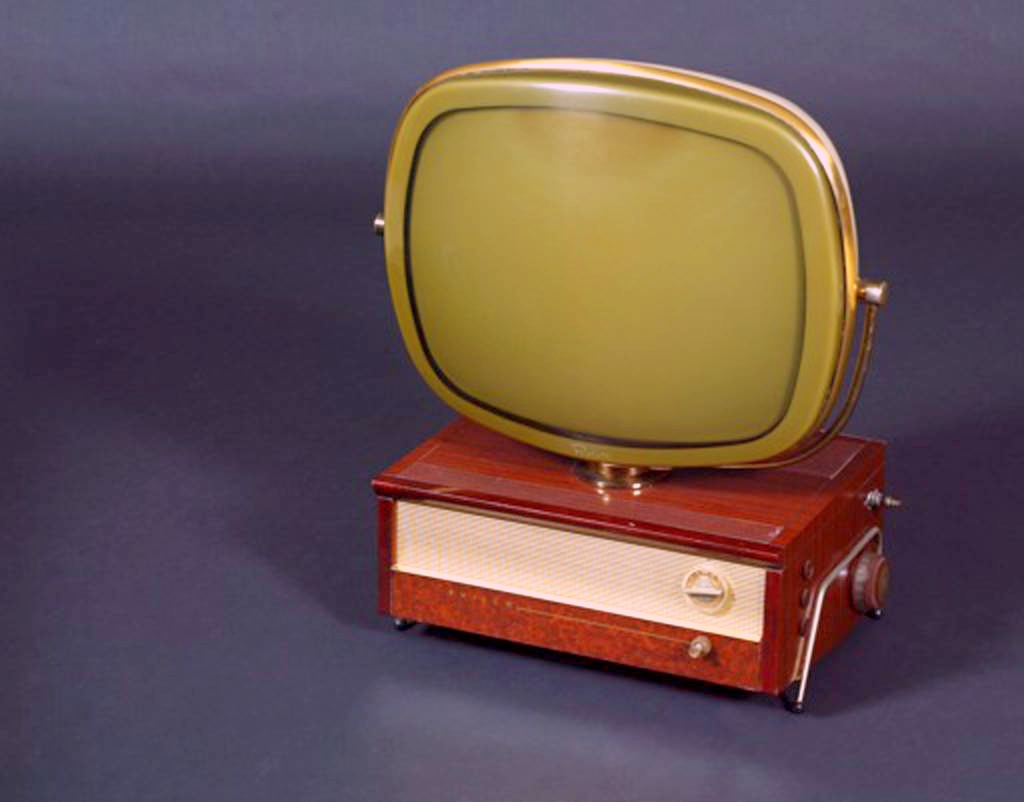
Philco Predicta television with its screen on a swiveling pedestal
The Philco Predicta's picture tube pops right out of the cabinet and swivels like a friendly robot head. The Children's Museum of Indianapolis / Wikimedia Commons, CC BY-SA 3.0

Space-Age Style

The Philco Predicta yanks the picture tube out of the box entirely — a swiveling screen floating on a pedestal, straight out of The Jetsons. It was gorgeous, futuristic… and broke down constantly. Today it's one of the most collectible TVs ever made.

DESIGN SO ICONIC IT LIVES IN MUSEUMS — INCLUDING THIS ONE
1968
SO GOOD IT WON AN EMMY AWARD (1973)
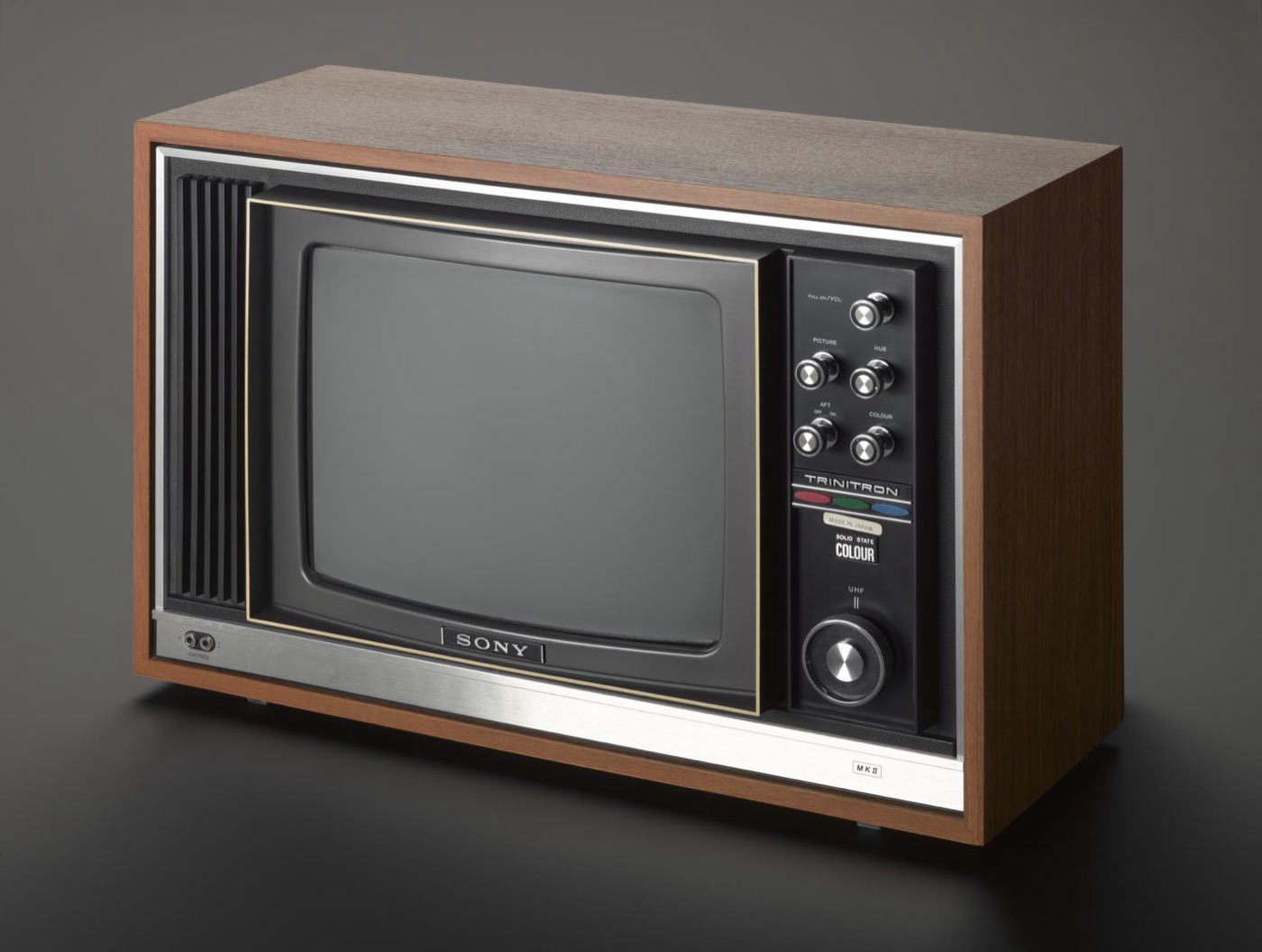
Early Sony Trinitron color television
An early Sony Trinitron — its striped aperture-grille screen made colors so good the design won an Emmy. The Science Museum, UK / Wikimedia Commons, CC BY 4.0

The Trinitron

Sony's Trinitron replaces the dot screen with vertical stripes and an "aperture grille" — the picture gets dramatically brighter and sharper. It becomes the best-selling, most-loved tube ever: over 280 million sold across 40 years. Spot an impossibly faint horizontal line across one? That's a hair-thin "damper wire" steadying the stripes — proof of a real Trinitron, not a defect.

TRINITRONS ARE STILL THE HOLY GRAIL FOR RETRO GAMERS
1969
JULY 20 1969 · LIVE FROM THE MOON

One Giant Broadcast

An estimated 600 million people — roughly one of every six humans alive — watch Neil Armstrong step onto the Moon, live, on their CRTs. The Moon camera spoke a strange slow-scan dialect no home set could display, so ground stations in California and Australia converted it the most delightfully crude way possible: pointing a regular TV camera at a monitor showing the feed, and broadcasting that. Every ghostly grey frame you've ever seen of that night is a picture of a picture.

THE MOON CAMERA SENT 10 FRAMES/SEC ON 320 LINES — YOUR TV WANTED 30 AND 525
1972
3 7 DEPOSIT QUARTER · BALL WILL SERVE AUTOMATICALLY

The Tube Learns to Play

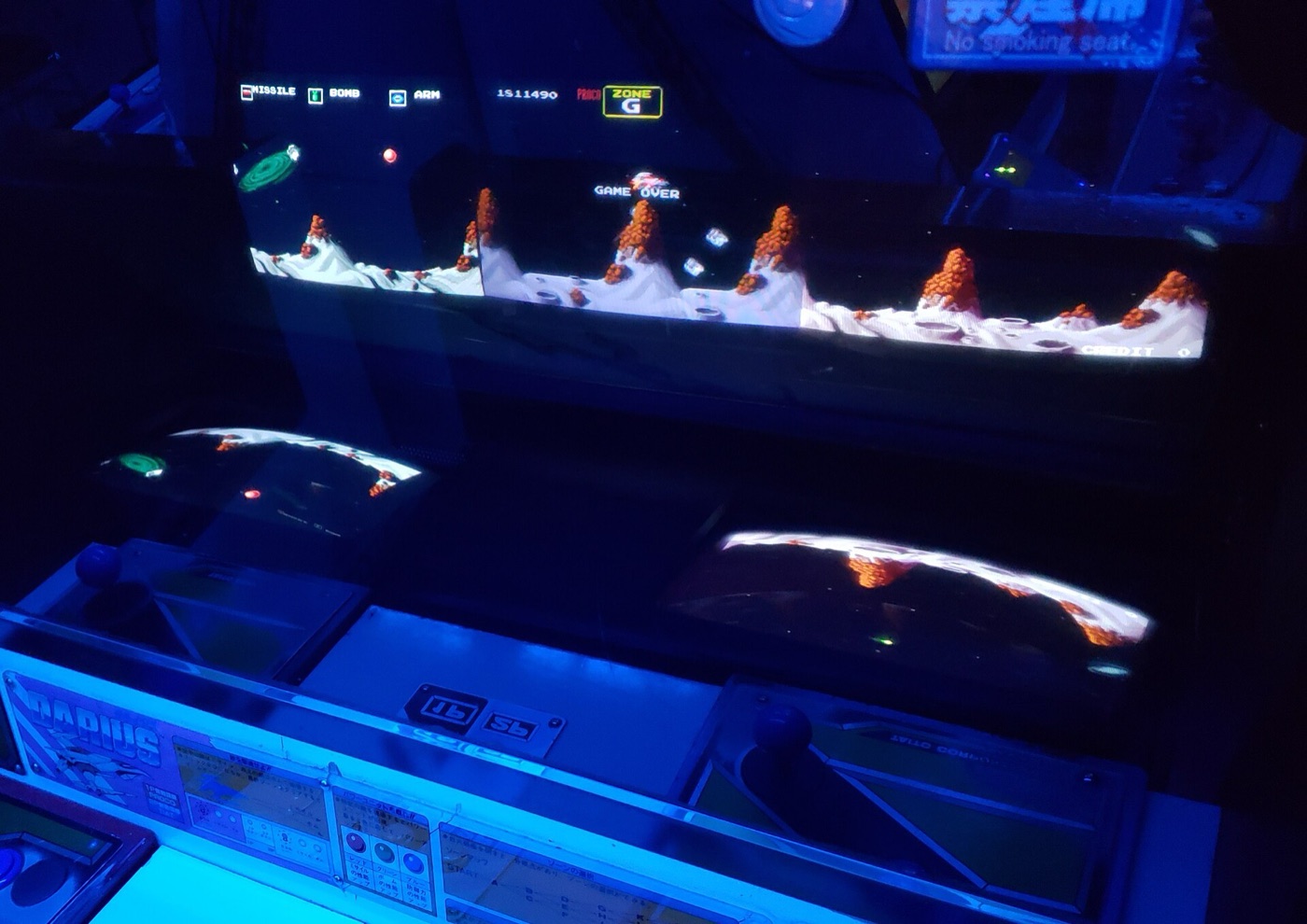
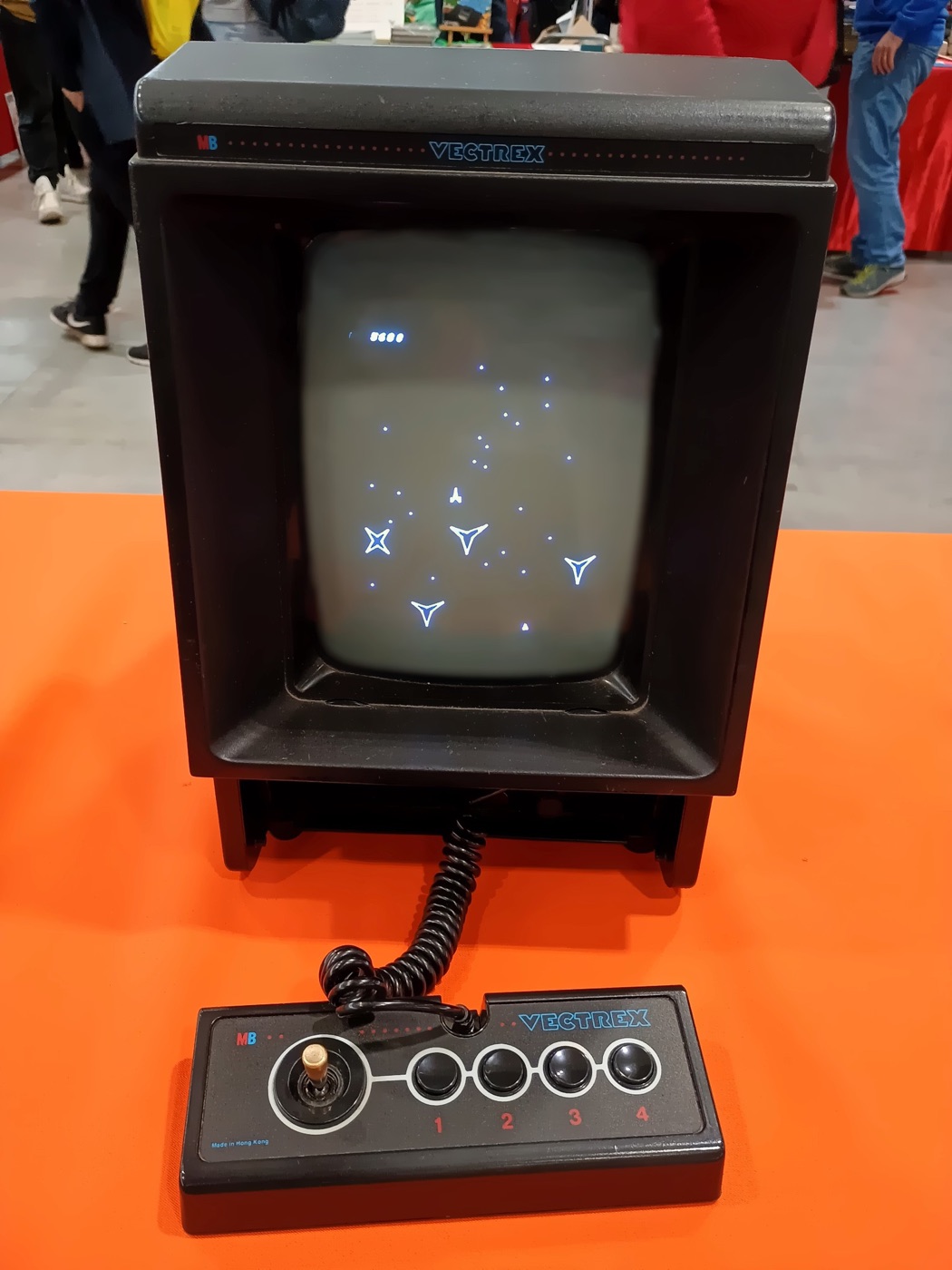
First the Magnavox Odyssey plugs a tennis game into living-room sets; months later Atari's Pong lands in a California tavern and within weeks "breaks" — its coin box jammed too full of quarters. The CRT has spent decades as a window you look through; now it answers back when you turn the knob. Soon vector arcade monitors (Asteroids, Lunar Lander) skip the pixel grid entirely and steer the electron beam like a pen, drawing spaceships in pure lines of light.

PONG'S ENTIRE RULEBOOK, PRINTED ON THE CABINET: "AVOID MISSING BALL FOR HIGH SCORE"
1989
BLOW ON THE CARTRIDGE. IT'S SCIENCE.*
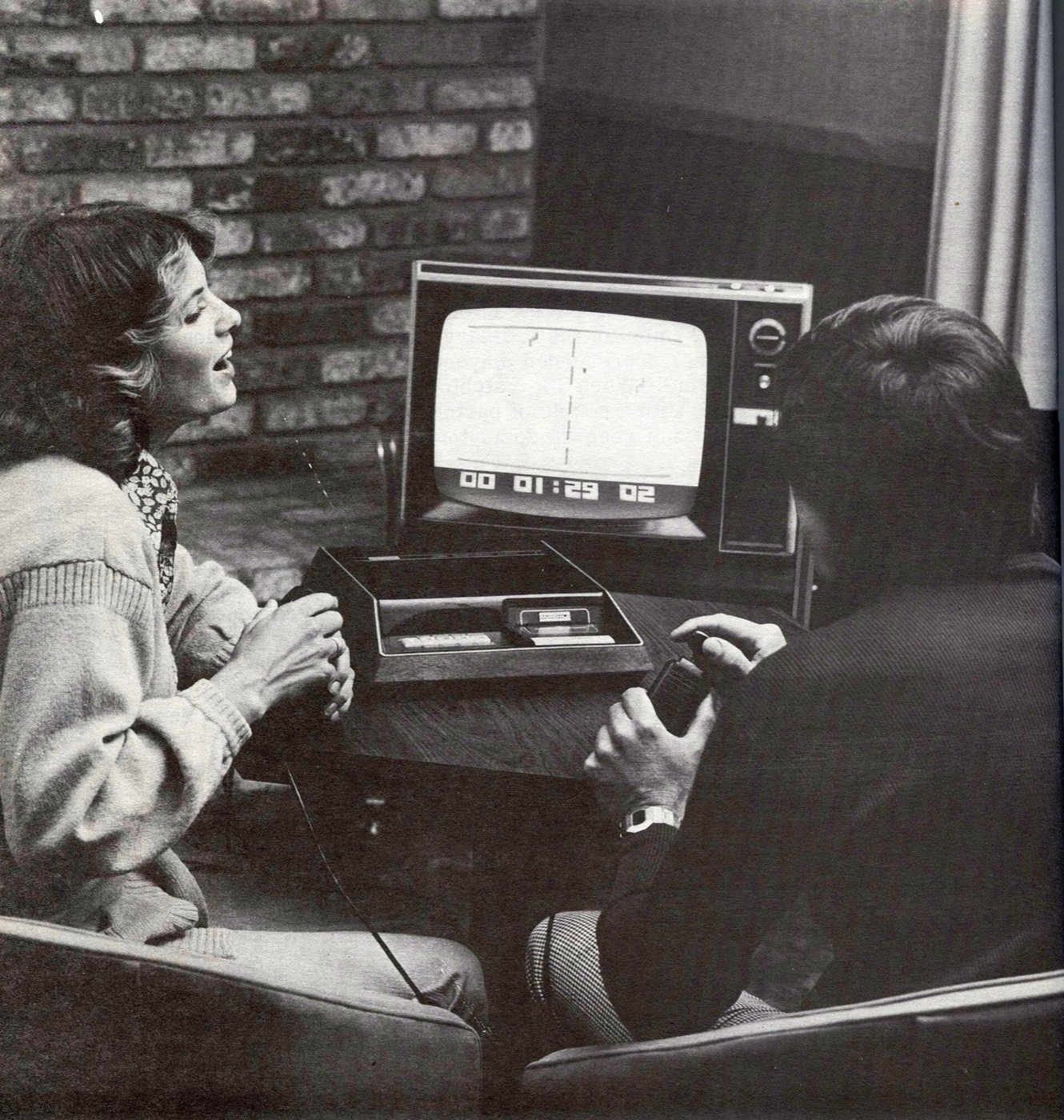
A home video-game console hooked up to a living-room television
Game night: a home console plugs into the living-room TV and the CRT learns to play. Electronic Engineering Times, photo by Liane Enkelis / Wikimedia Commons, public domain

The Golden Age

Remote controls, Saturday-morning cartoons, and video games. The CRT becomes the canvas for Nintendo, Sega, and PlayStation — consoles were literally designed around how tubes draw a picture. Wood grain gives way to black plastic, and screens grow bigger every year.

*IT WASN'T ACTUALLY SCIENCE. BUT WE ALL DID IT.
2004
40 INCHES · 304 POUNDS · ZERO REGRETS
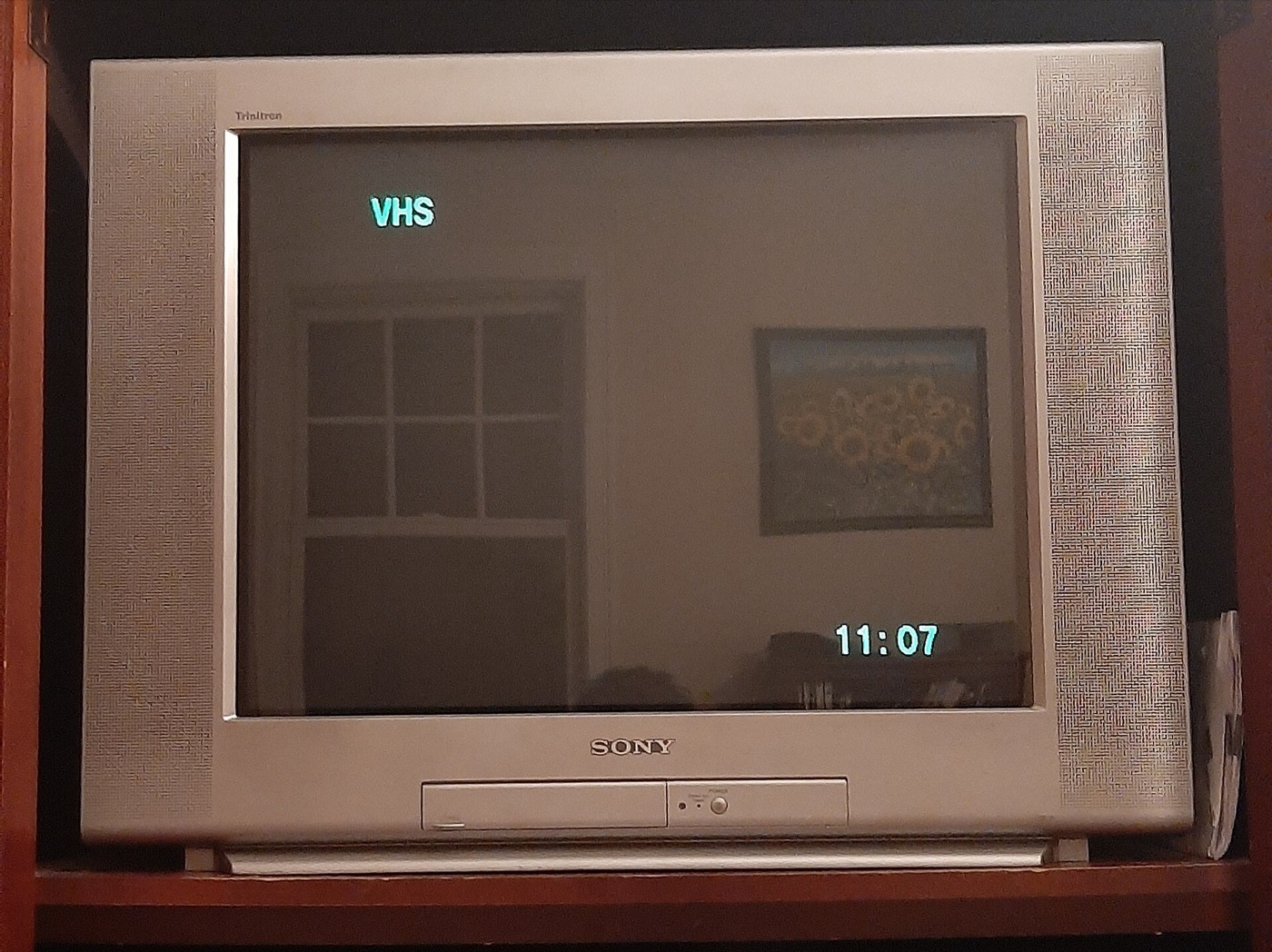
Flat-faced Sony Trinitron WEGA television in an entertainment center
A flat-faced Sony Trinitron WEGA holding the fort in the entertainment center — VHS clock and all. Roboat06 / Wikimedia Commons, CC BY-SA 4.0

The Last Giants

CRTs make their final stand: flat-faced Trinitron WEGAs, widescreen HD tubes, absolute monsters. Sony's 40-inch KV-40XBR700 WEGA weighed 304 pounds — more than a full-grown panda. (The all-time champ, 1989's 43-inch PVM-4300, hit 440.) Moving one up a staircase ended friendships. Meanwhile, thin little LCDs were quietly getting better…

MOVERS STILL TELL LEGENDS OF THE 300-POUND TVS
2008
…AND THEN, A TINY DOT. AND THEN, DARK.
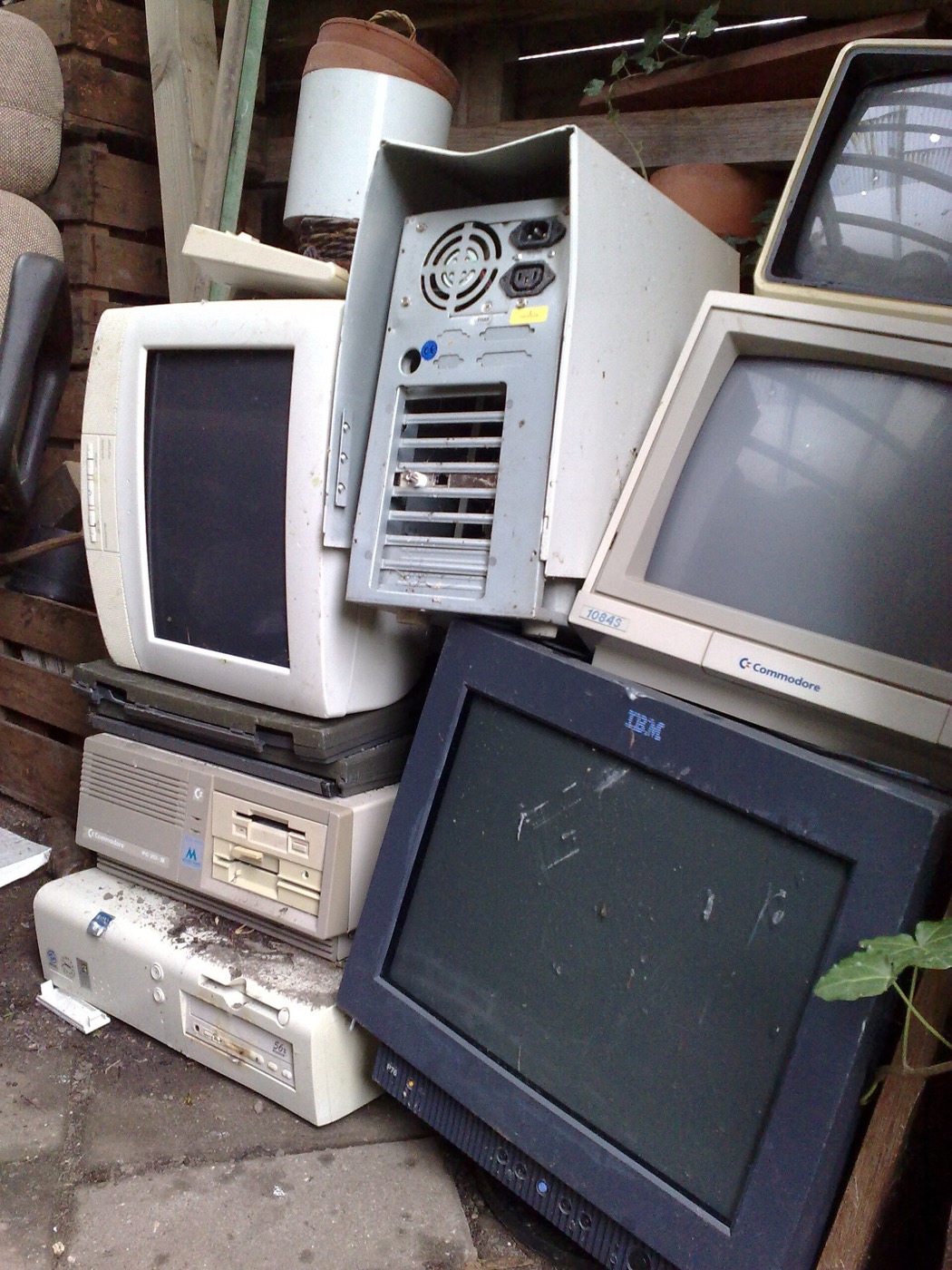
Pile of discarded CRT televisions awaiting recycling
Where the tubes went: a pile of retired CRTs waiting for recycling after the flat-panel takeover. AvWijk / Wikimedia Commons, public domain

Lights Out… Almost

Factories switch off. Sony ends Trinitron production; by the early 2010s the last major CRT lines fall silent after billions of tubes. But the story doesn't end — retro gamers, artists, and collectors keep tubes glowing, and working CRTs now sell for more than ever.

THE TUBE IS DEAD · LONG LIVE THE TUBE — CONTINUE ON CH 07
CH 03 · CUTAWAY VIEW

INSIDE
THE TUBE

A CRT is a glass cannon that shoots electrons at your eyeballs (safely). Tap each part of the cutaway to see what it does.

GUN YOKE ANODE MASK SCREEN GLASS
1

A heated cathode boils electrons off its surface, like steam off a kettle.

2

A huge voltage (up to 30,000V) slingshots them down the tube.

3

Magnetic coils steer the beam left-right and up-down, thousands of times a second.

4

The beam smacks into phosphor, which glows — and that glow is the picture.

One more thing about that glass: the tube is a near-perfect vacuum, so the atmosphere squeezes it with a force of several tons — a big reason CRTs weigh so much. The leaded glass also soaked up the faint X-rays the 30,000-volt beam made when it stopped. The screen you watched through was also your radiation shield.

CH 04 · SLOW-MOTION TELEVISION

ONE DOT
DRAWS EVERYTHING

A CRT never shows a whole picture. It shows one glowing dot, sweeping left-to-right, top-to-bottom, so fast your brain glues it into an image. Here's that scan — slowed down millions of times.

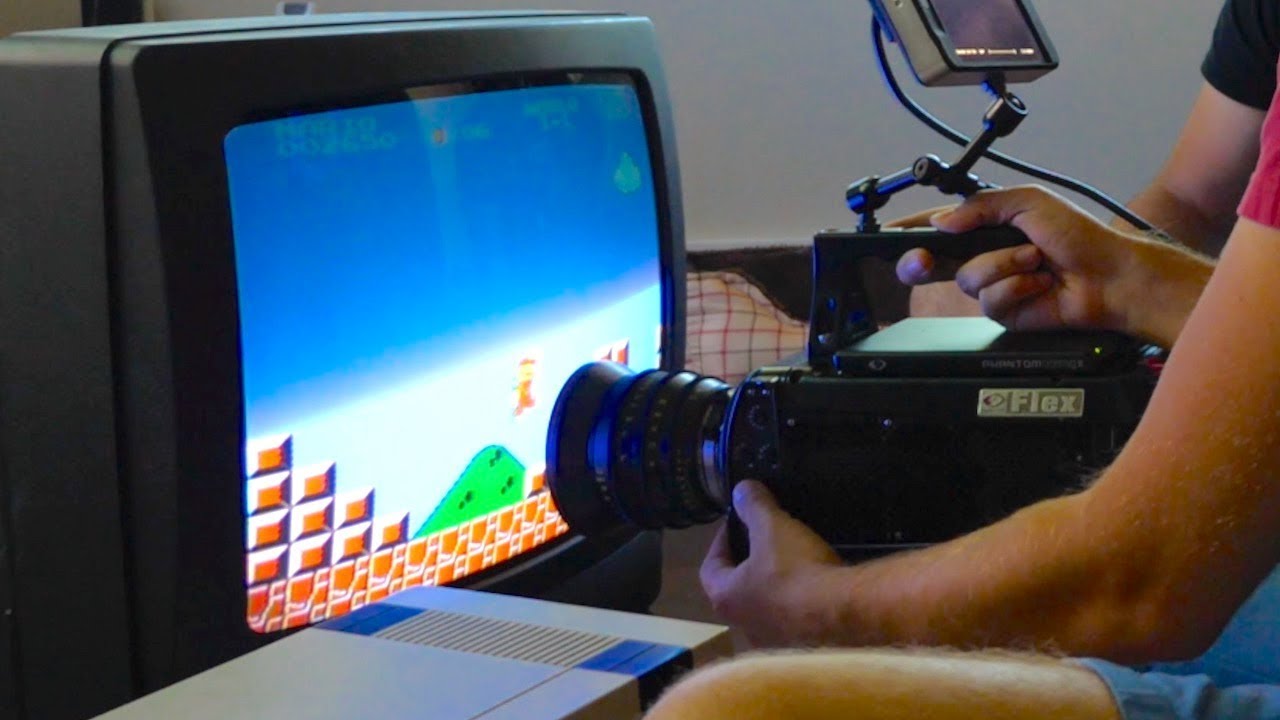
Crank persistence down to see what the tube really shows at any instant: almost nothing! Real phosphor glows for just a few thousandths of a second. Interlacing draws every other line first — an old trick to double the smoothness for free. In 2018 The Slow Mo Guys filmed a real CRT at 380,000 frames per second and caught exactly this: Mario painted line by line, each streak fading after only about six scanlines.

CH 05 · RED + GREEN + BLUE

THE SECRET
DOTS

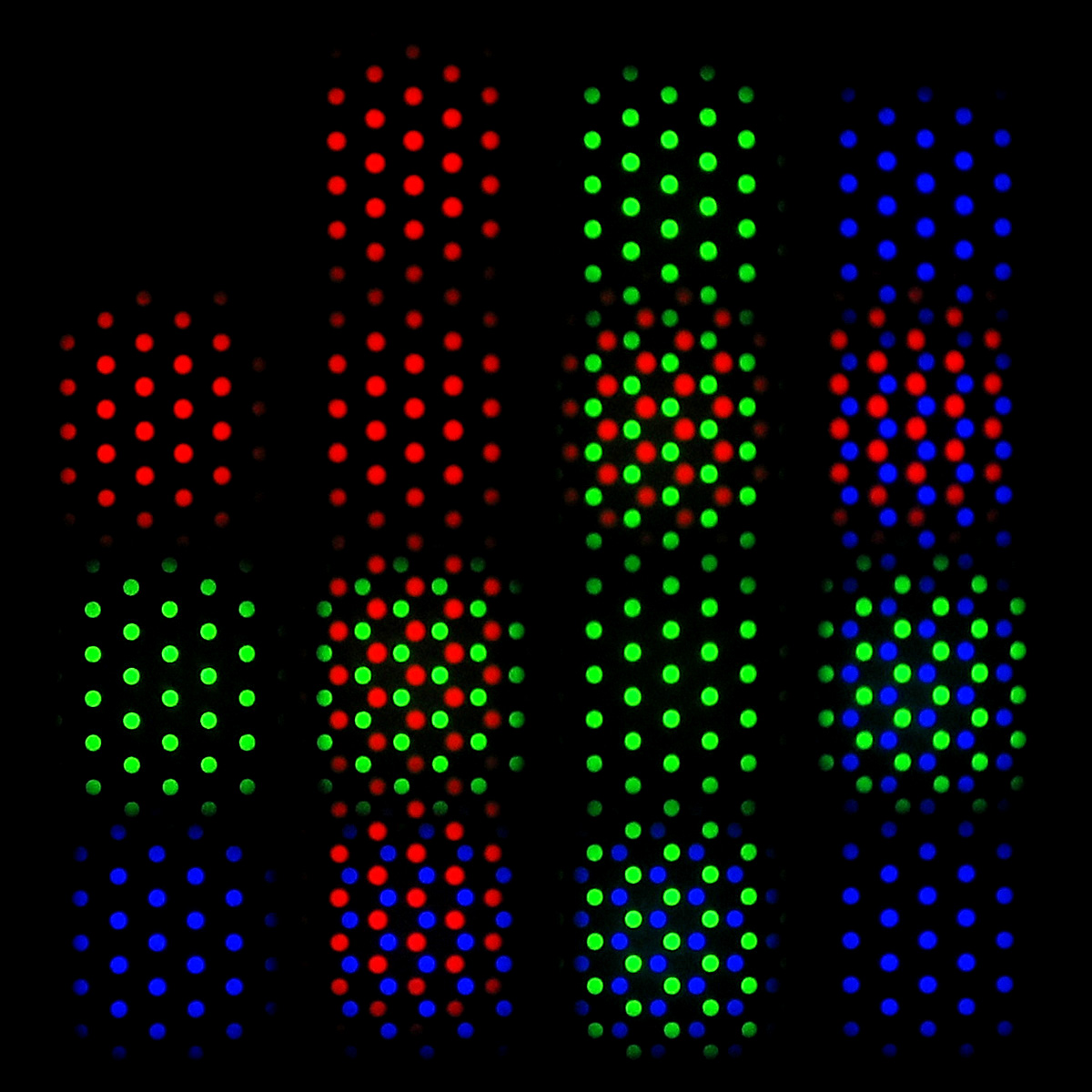
Every color a CRT ever showed is made of tiny red, green and blue phosphor dots — too small to see. Drag the loupe over the picture to zoom in and catch them in the act.

◈ DRAG ME
SCREEN TECHNOLOGY

A 27-inch TV packs close to a million phosphor dots, in red-green-blue trios. The mask is a metal sheet full of holes that makes sure each electron gun can only ever hit its own color. No mask, no color TV.

Extreme close-up of red, green, and blue phosphor dots on a CRT screen
Up close, every CRT picture dissolves into glowing red, green, and blue phosphor dots — this is all a TV ever draws. Selçuk Oral / Wikimedia Commons, CC BY-SA 3.0
CH 06 · HANDS ON

THE
CONTROL ROOM

A fully simulated tube TV. Twist the knobs, lose the vertical hold, drown it in static — then hit DEGAUSS for the best sound a TV ever made.

CH 3
BRIGHT
CONTRAST
V-HOLD
STATIC

Real TVs had these exact knobs. V-HOLD kept the picture from rolling like a slot machine — get it wrong and see why kids were sent to "fix the TV." Drag knobs in a circle (or use arrow keys). Even the Earth's magnetic field bends a real CRT's beam — makers built different tubes for the Northern and Southern Hemispheres, and turning a set to face a new wall could tint the colors until a degauss shook it out.

CH 07 · WHY TUBES STILL MATTER

THE TUBE
LIVES ON

Zero Lag

A CRT draws the picture the instant the signal arrives — there's no computer inside "thinking" about it. Modern TVs can take 5–100 milliseconds to process a frame. For fast games, tube players literally see the future first.

🎯 The Light-Gun Lab

How did the Duck Hunt gun know where you aimed? It's the TV's fault. When you pull the trigger, the game flashes the screen black, then paints a white square where the duck is. The gun is just an eye — if it sees the white flash, the console knows you were pointing at the duck. Try it:

HITS: 0

This trick only worked because CRTs draw with zero delay. Point a real light gun at a modern TV and it misses every time — the flash arrives too late.

🕹️ Built for Pixels

Retro game art was drawn for CRTs. The soft glow blends chunky pixels into smooth shapes — artists counted on it. On a razor-sharp modern screen, the same art looks blockier than it ever did in the 90s. The tube was part of the art.

🎨 Tube Art

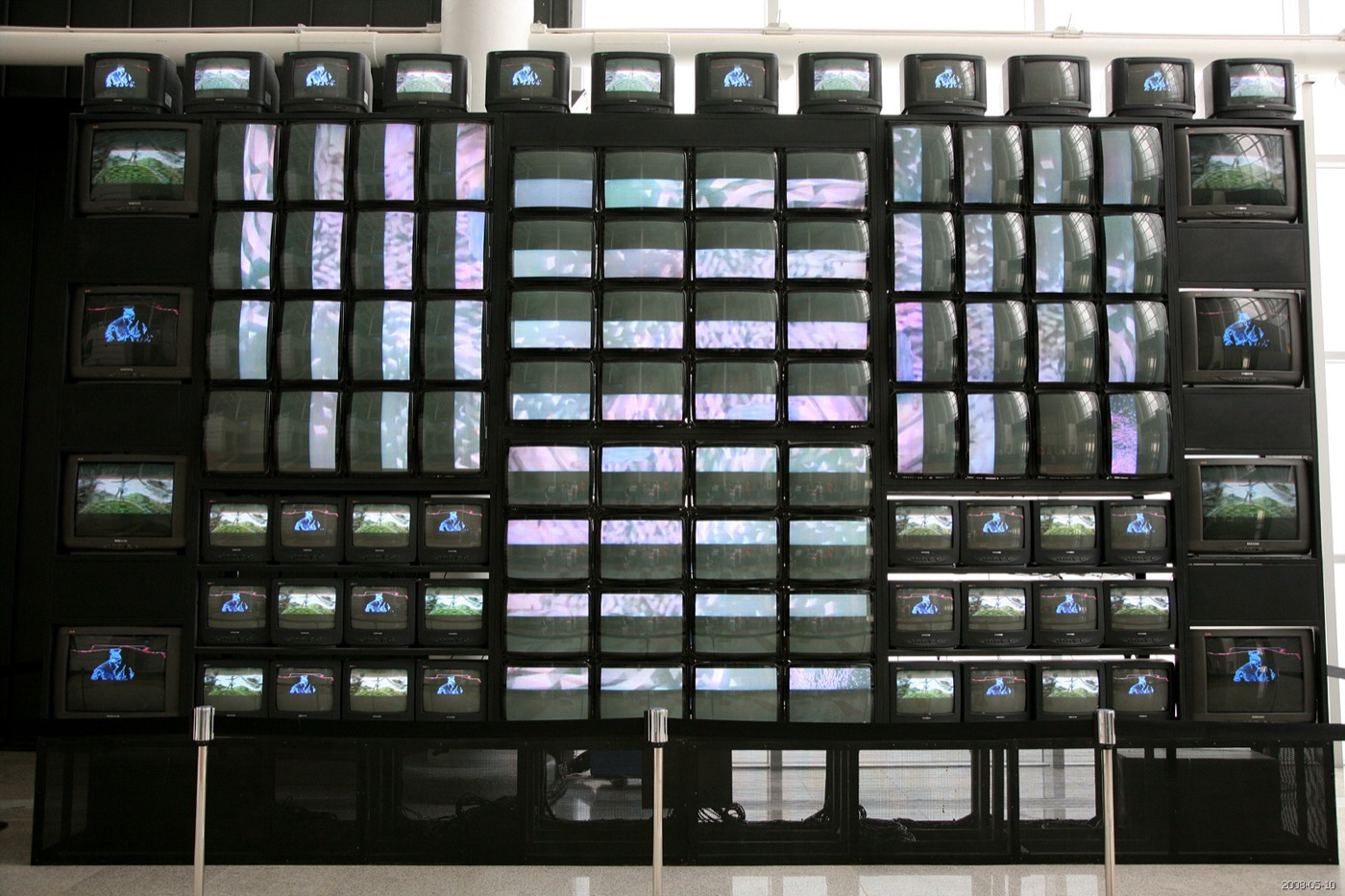
Artists like Nam June Paik built towers of glowing TVs as sculpture — museums now keep dedicated CRT repair techs on staff to keep them alive. When these tubes die, there are no new ones. Every working CRT is officially an endangered species.

Nam June Paik sculpture built from stacked glowing CRT televisions
Nam June Paik's 'One Hundred and Eight Torments' stacks 108 CRT televisions into one giant glowing artwork. Junho Jung / Wikimedia Commons, CC BY 3.0

📡 Deep-Space Veteran

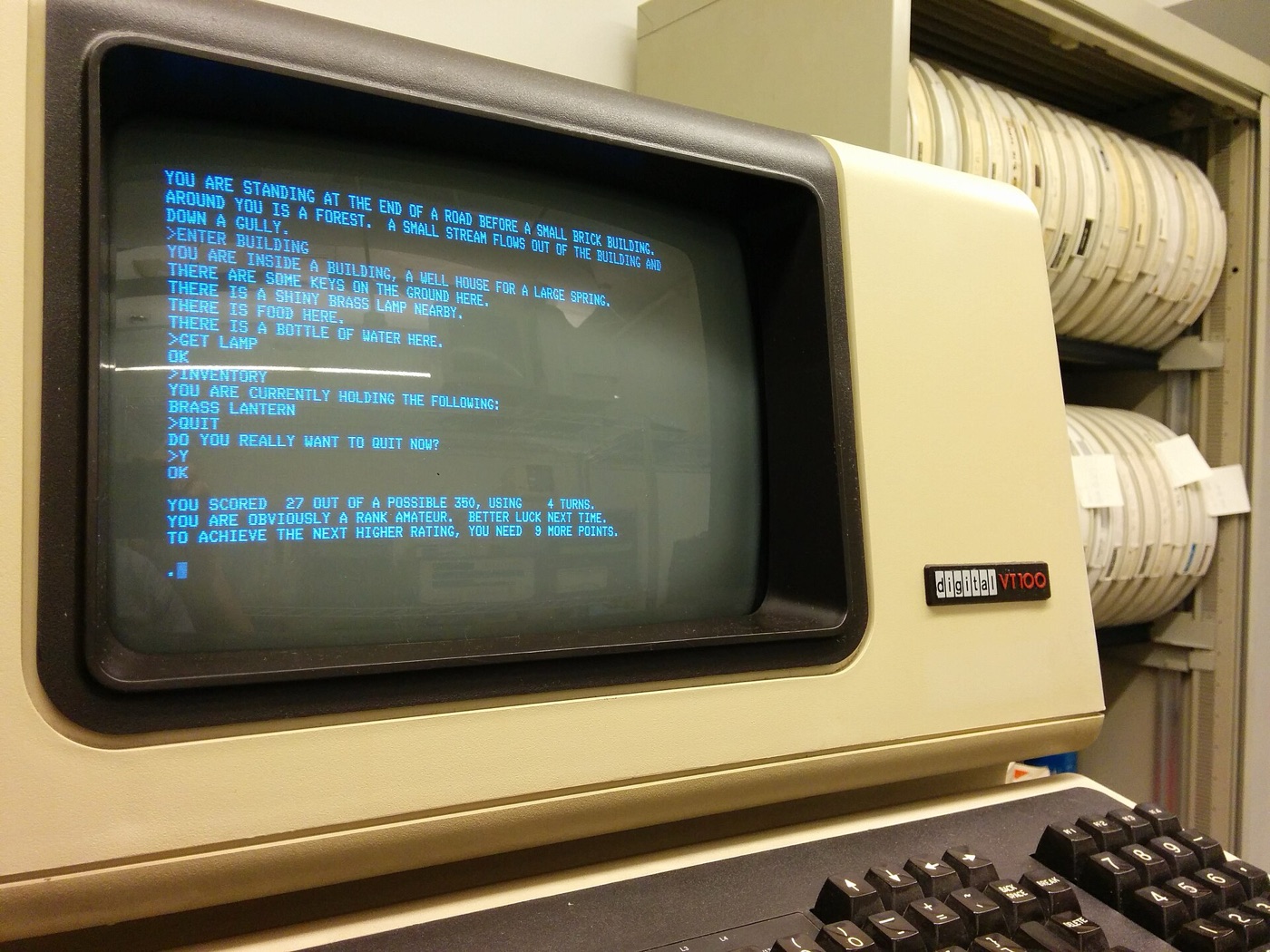
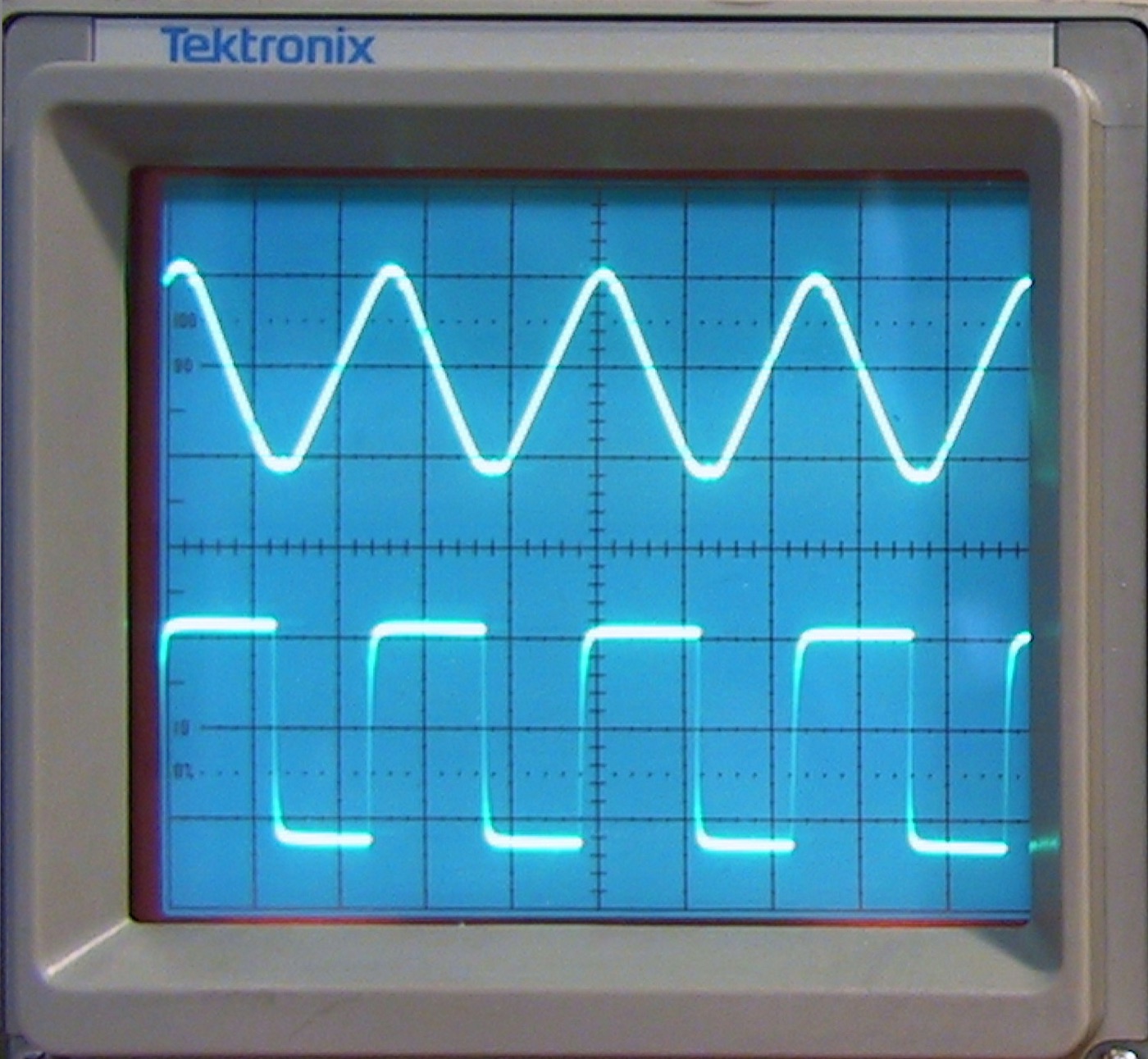
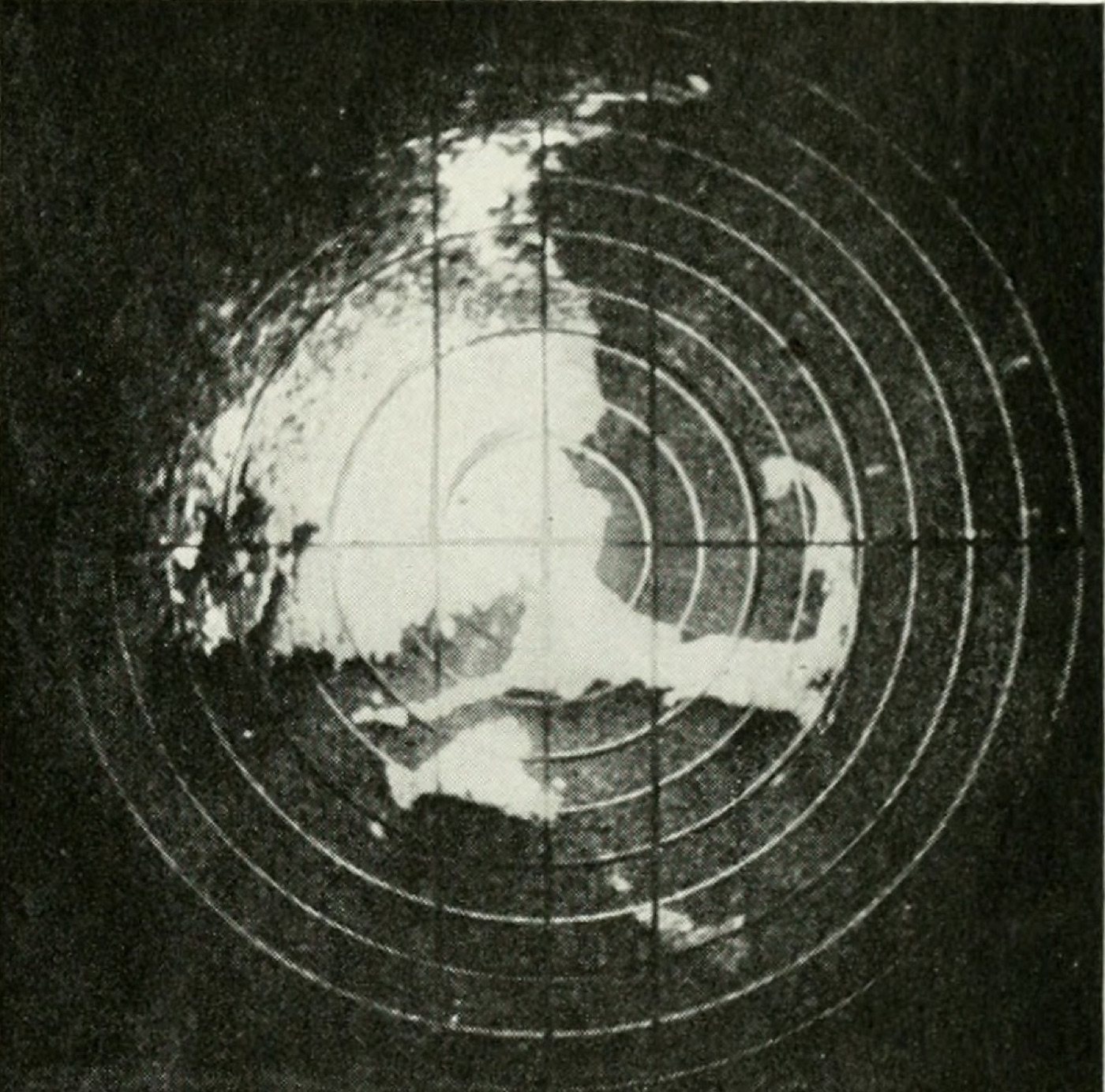
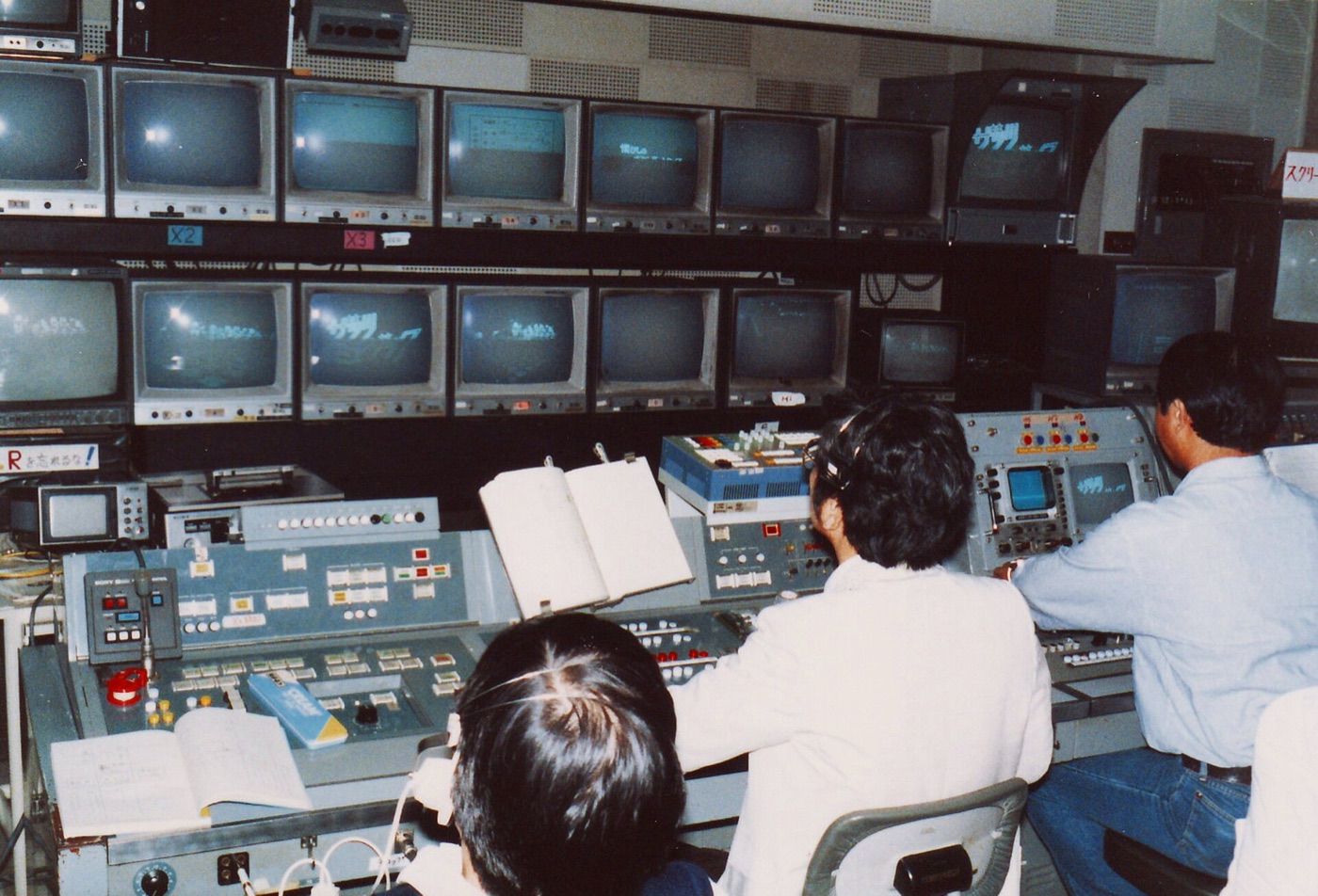
CRT tech didn't just live in living rooms — radar scopes, oscilloscopes, the Apollo era's mission-control screens, early computer terminals, even airplane cockpits ran on tubes. The whole electronic age learned to draw on a CRT first.

DECODER RING · TUBE WORDS TO IMPRESS ADULTS WITH
▸ TAP A WORD
CH 08 · ODDBALLS & ICONS

THE
COLLECTION

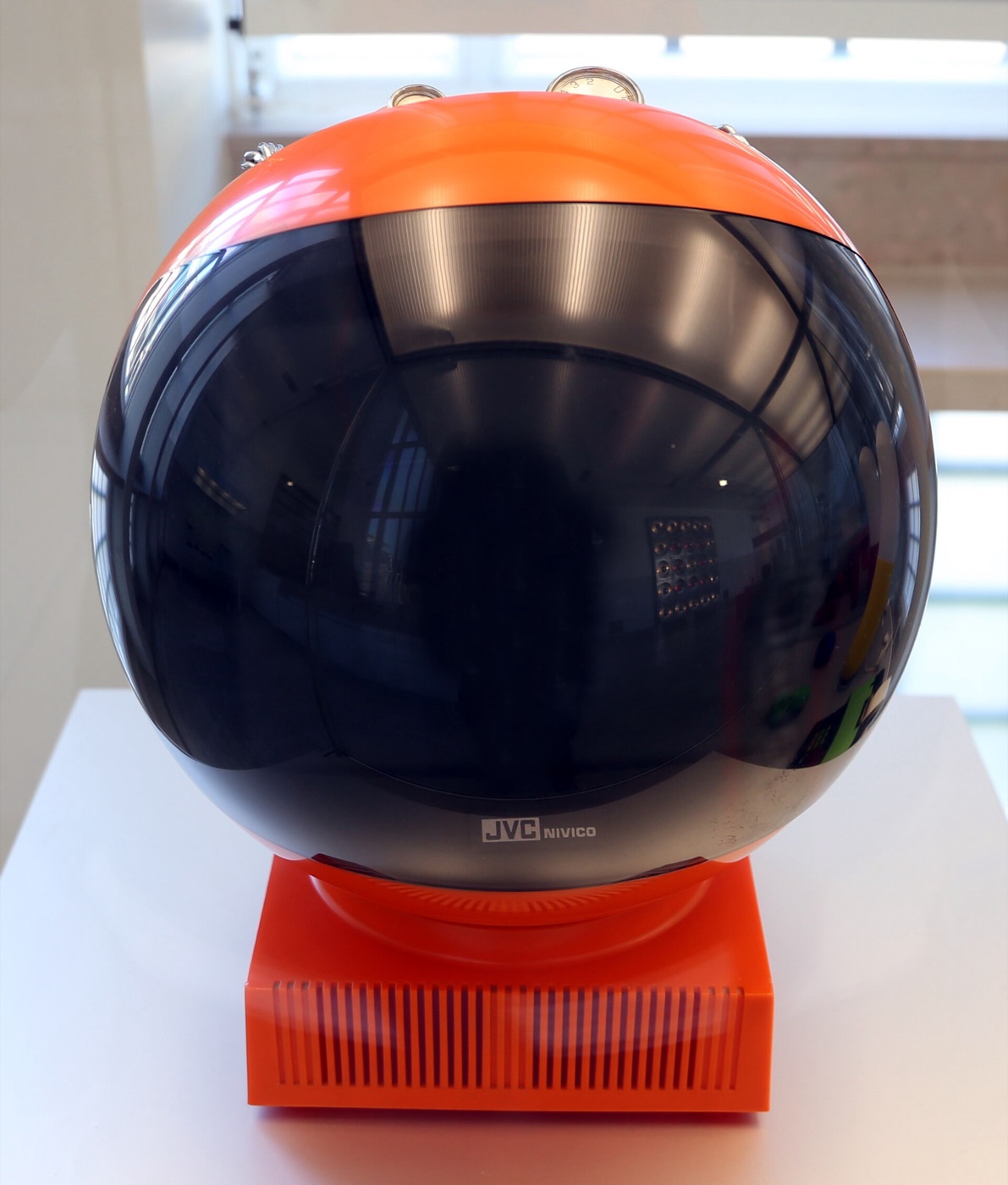
Once engineers could bend a picture tube to their will, designers went gloriously off-script: TVs shaped like space helmets, TVs that rode in a jacket pocket, TVs that outweighed the family fridge. Real photographs of real machines — every one of these actually existed.

CH 09 · EVERYTHING DRAWN TO SCALE · NO CHEATING

BIG &
SMALL

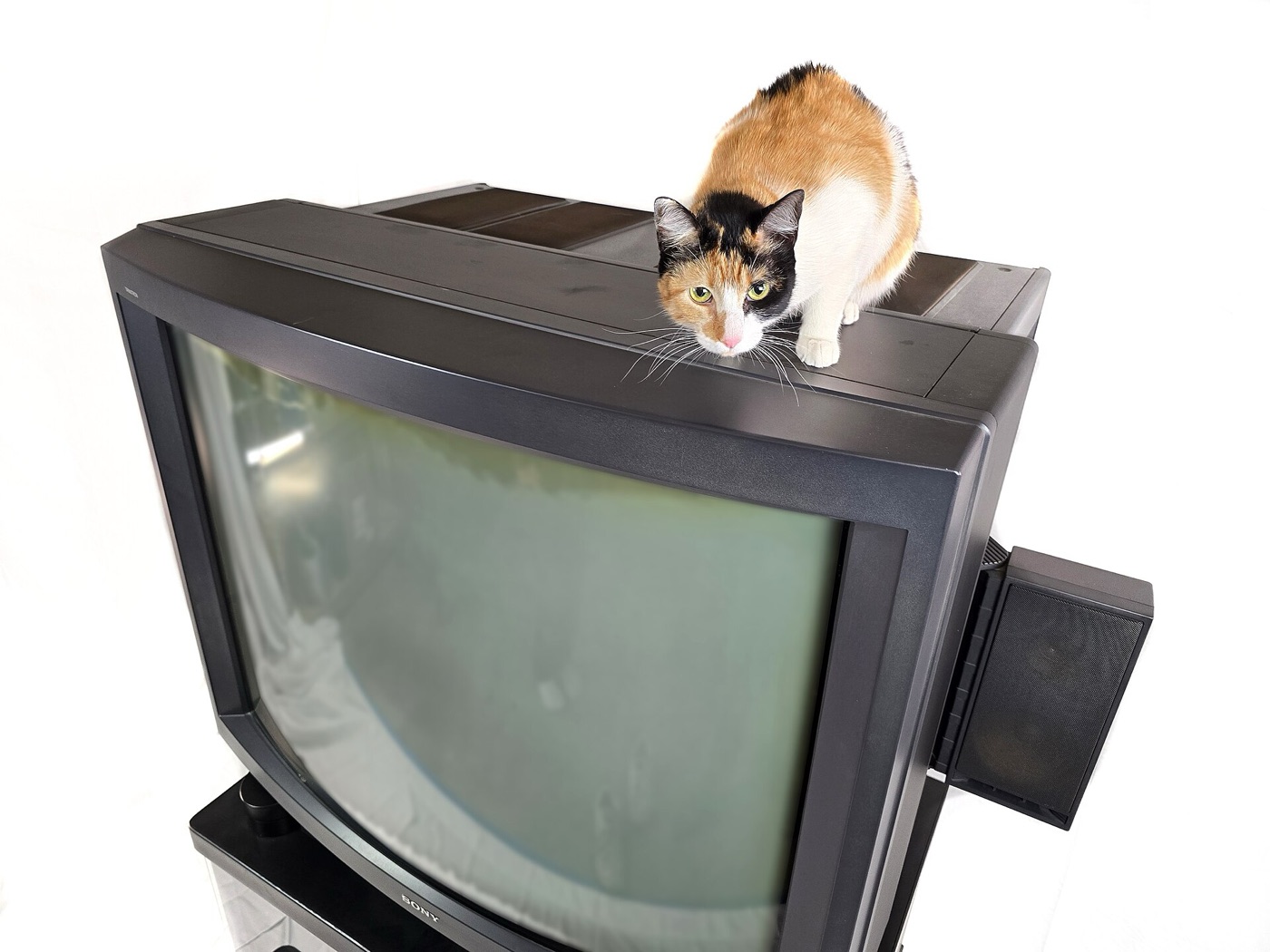
CRTs never got thin — they only got heavy. Bigger screen meant thicker glass to hold back the air pressure, until TVs weighed more than the people watching them. Every set on this floor is drawn to the same scale, next to a 140 cm kid (that's you). Tap a television for its stats — then hit SHOW WEIGHTS to see how many of you each one is worth.

THE VISITOR (YOU) YOU · 140 CM SONY WATCHMAN FD-10 2″ SONY KV-1310 TRINITRON 13″ PHILCO PREDICTA PRINCESS 17″ 19″ PORTABLE 19″ 27″ LIVING-ROOM SET 27″ SONY KV-36XBR450 36″ SONY PVM-4300 · THE BIGGEST CRT EVER SOLD SONY PVM-4300 43″ · THE BIGGEST
1 KID = 35 KG
CH 10 · NOW SHOWING

SCREENING
ROOM

Seven short features, hand-picked from across the internet. Press play on any set and the film opens on YouTube — the one room of the museum that needs an internet connection.

NOW SHOWING · 11:38

HOW A TV WORKS IN SLOW MOTION — THE SLOW MO GUYS

At 380,000 frames per second the "whole picture" turns out to be one glowing dot, sprinting.

NOW SHOWING · 25:51

THE SECRET LIFE OF MACHINES — THE TELEVISION SET (1988)

Two cheerful inventors take a telly to bits and build the picture back up trick by trick — garage science at its finest.

NOW SHOWING · 1:12

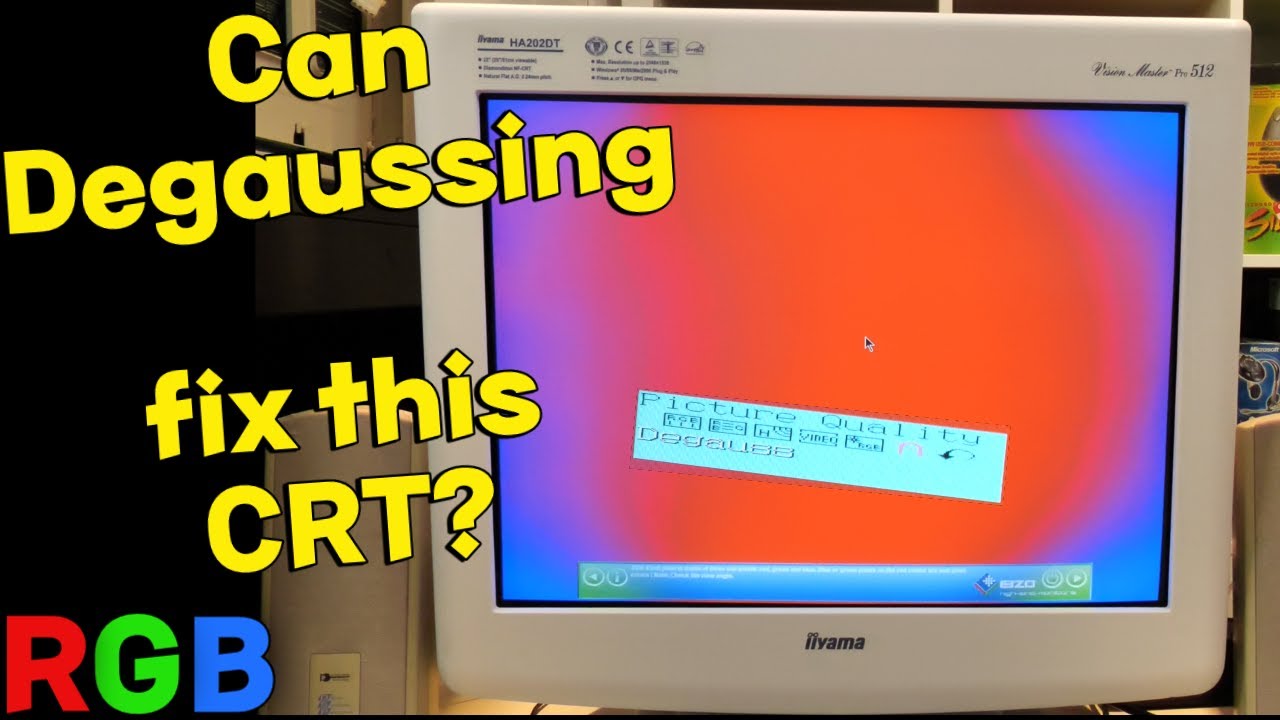
THE MOST SATISFYING CRT DEGAUSSING EVER?

72 seconds of a rainbow-stained screen going THUNK and snapping back to perfect. You will watch it twice.

NOW SHOWING · 16:46

LINES OF LIGHT: HOW ANALOG TELEVISION WORKS

How does a picture ride a radio wave? Every line of the signal, decoded on real hardware with dry wit.

NOW SHOWING · 11:56

HOW TELEVISION WORKS — 1950 EDUCATIONAL FILM

How grown-ups in 1950 explained the newest machine on Earth — the tube was young once, too.

NOW SHOWING · 10:01

CRT TUBE MANUFACTURING — PHILIPS / MULLARD, 1966

Inside a 1966 tube factory: molten glass, electron guns, phosphor painted with light — no robots, just steady hands.

NOW SHOWING · 22:18

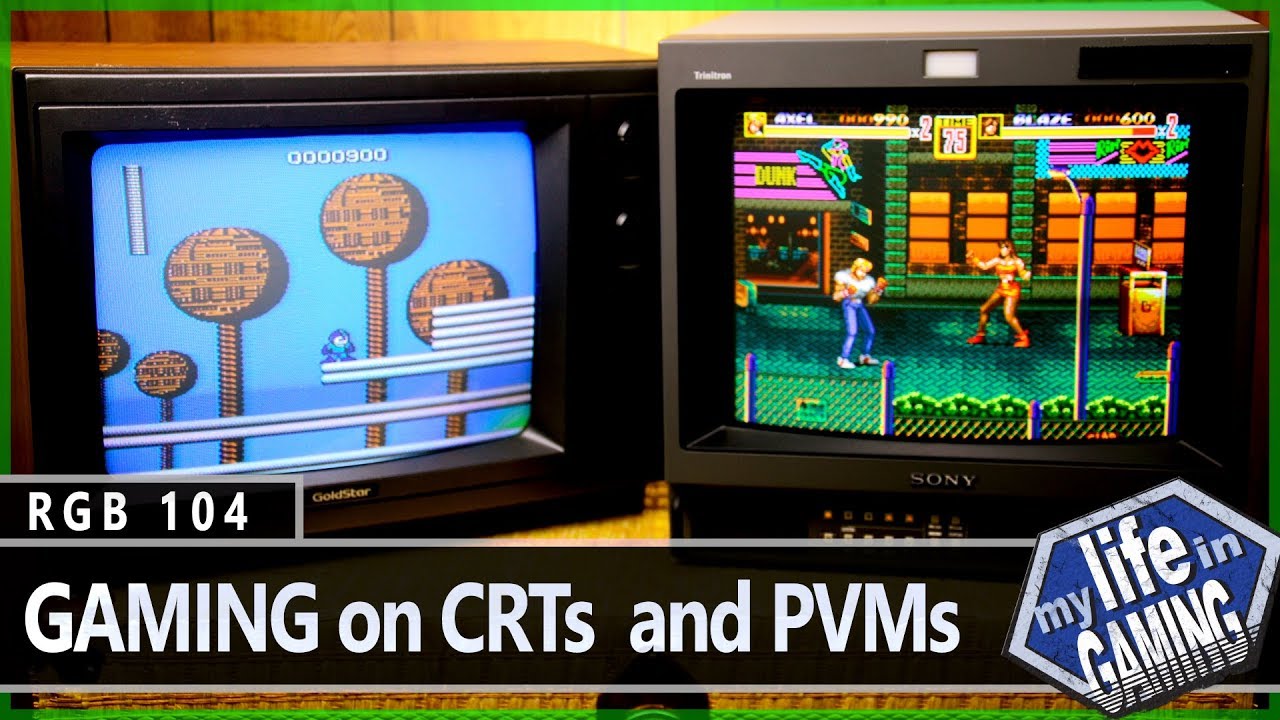
GAMING ON CRT TELEVISIONS, PVMS AND BVMS — MY LIFE IN GAMING

Why serious players still haul 100-pound televisions home for their pixels — and why they're right.

CH 11 · MYTH v. FACT · NO LIFELINES · NO COMMERCIAL BREAKS

POP
QUIZ

You've toured the whole museum — now the museum quizzes you. Ten claims about tube TVs: some are solid engineering fact, some are pure playground legend. Call MYTH or FACT — the studio audience is watching.

SCORE 0/10
QUESTION 1 OF 10

Sitting close to the TV will ruin your eyes forever.